Apple Cinnamon Babka
By From Luxembourg With Loaf · Last edited Nov 21, 2026

Apple Cinnamon Babka
By From Luxembourg With Loaf · Last edited Nov 21, 2026
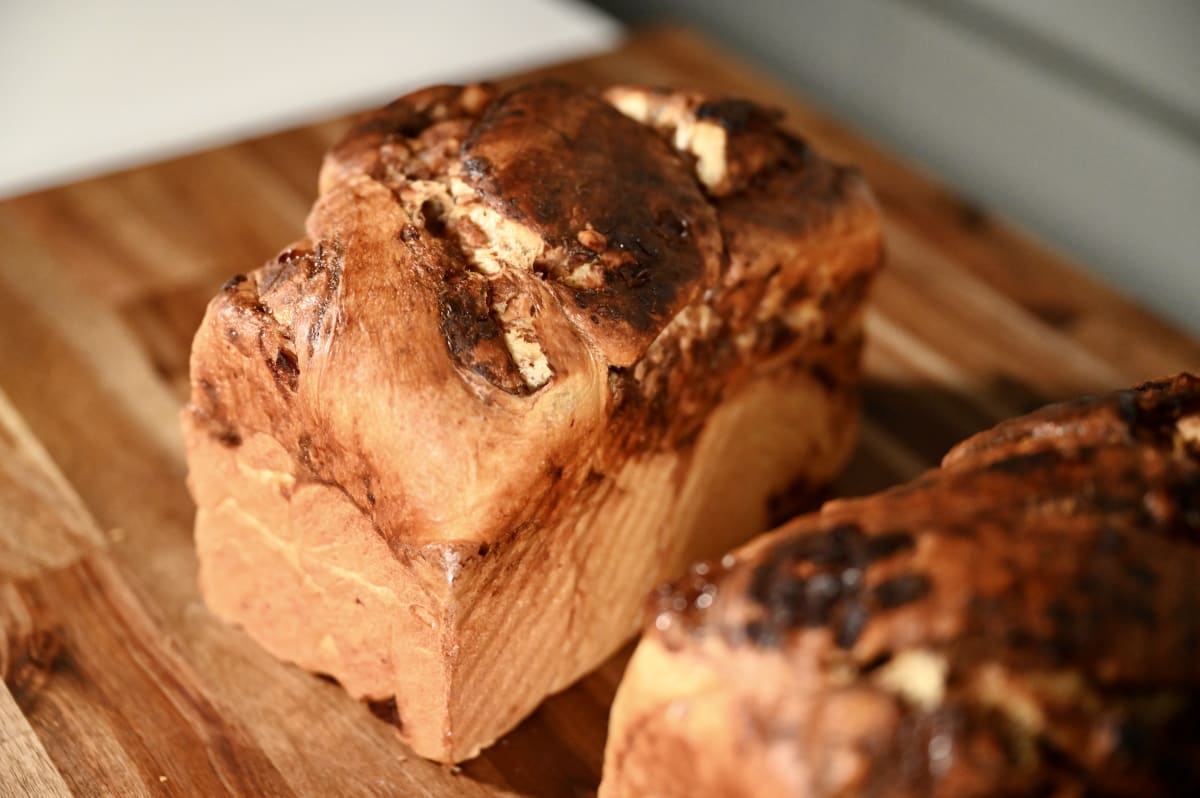
In my second endeavor to craft a sourdough babka, the initial stages unfolded smoothly. The dough received meticulous kneading, the filling achieved perfection, and the fermentation process proceeded without a hitch. However, a pivotal misjudgment occurred during the baking phase – I severely underestimated the oven spring. Consequently, the appearance of my babka fell short of my expectations. Despite this setback, the silver lining emerged in the form of a delightful taste. The flavors harmonized beautifully, providing a satisfying culinary experience that compensated for the visual imperfections.
- Total weight
- 2,617g
- Yield
- 2units
- Unit weight
- 1309g
- Hydration
- 60%
- Total time
- 21 h 5 min
Ingredients
Stiff Starter
160gFilling
830gMain Dough
1,787gNutrition facts 330 kcal per 100 g · estimated
| Nutrient | Per piece (of 2) | Per 100 g |
|---|---|---|
| Energy | 3,668 kcal | 330 kcal |
| Fat | 156.8 g | 14.1 g |
| of which saturates | 76.5 g | 6.9 g |
| Carbohydrates | 484 g | 43.5 g |
| of which sugars | 122.1 g | 11 g |
| Fiber | 26.9 g | 2.4 g |
| Protein | 75.6 g | 6.8 g |
| Salt | 4.06 g | 0.37 g |
AI estimate based on the ingredients. Per 100 g assumes the bread loses 15% of its dough weight in the oven. Not a substitute for lab-tested label values.
Process
Preferment Preparation
12 hThe evening before baking, combine the wheat flour, water, and sourdough starter. Mix until a stiff dough forms and let it ferment overnight.
Initial Mixing
10 minThe following day, combine the wheat flour, milk, stiff starter, and sugar in a mixer. Mix until the ingredients are incorporated.
Egg Incorporation
5 minAfter 5 minutes of mixing, add the eggs to the dough. Continue mixing until fully absorbed.
Butter and Salt Integration
5 minAfter another 5 minutes, begin adding the butter in two stages (half at a time), waiting 2–3 minutes between additions. Finally, add the salt and mix until the dough is smooth and elastic.
Strength Building
10 minRemove the dough from the mixer. Perform a series of slap and folds on a clean surface. Form the dough into a ball and place it in a greased plastic container.
Bulk Fermentation and Folding
2 hLet the dough rest. Perform a coil fold after 30 minutes. If necessary, perform a second coil fold after another 30 minutes. Total bulk fermentation time is approximately 2 hours.
Filling Preparation
10 minRoast the hazelnuts, then chop them manually or briefly pulse in a mixer. Sauté sliced apples in butter. Optionally deglaze with rum before adding the sugar and cinnamon. Cook until tender and set aside to cool.
Shaping and Assembly
15 minSpread the dough out into a rectangle. Distribute the apple mixture and hazelnuts evenly over the surface. Roll the dough tightly and slice lengthwise to create two strands. Twist the strands together and place the loaf into a prepared loaf pan.
Final Proofing
5 hPlace the loaf pan in a warm environment. Let it ferment for 4–6 hours until the dough has risen to approximately 2–3 cm below the rim of the pan.
Baking
1 hBake the loaf in two phases as detailed below.
Initial Bake
Final Bake
Cooling
10 minAfter baking, remove from the oven and allow the loaf to cool for at least one hour before slicing.
Fermentation estimate
Calculated from this recipe's levain, salt and hydration with Bill Wraith's sourdough rise model.
- Pre-fermented flour
- 11.6%
- Salt
- 0.8%
- Hydration
- 60.2%
This recipe's schedule
Reaches 64% of the model's target. The model has it done after 4 h 10 min.
Reaches 230% of the model's target. The model has it done after 2 h 15 min.
Steps without their own temperature use the temperatures above.
An estimate. Starter vigour, flour and dough temperature drift all move it, so watch the dough, not the clock. Source: Bill Wraith, Sourdough Rise Time Modelling (2007)
Community
Log in to share your thoughts or bakes.
Log in to participate