Old Bread Sourdough
By From Luxembourg With Loaf · Last edited Nov 21, 2026

Old Bread Sourdough
By From Luxembourg With Loaf · Last edited Nov 21, 2026
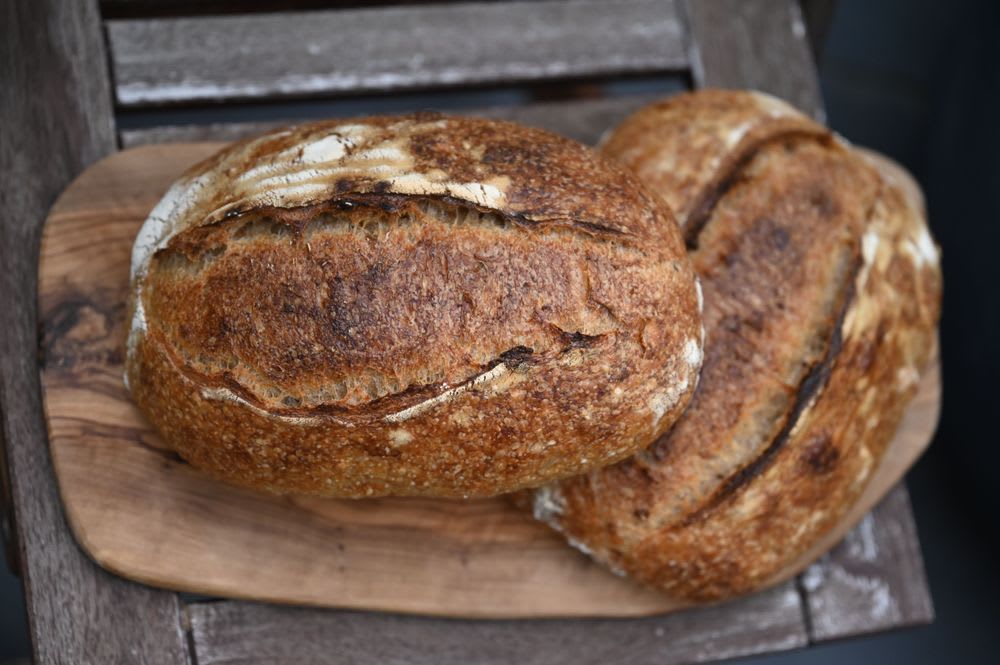
Like my last recipe, this one is all about flavour. While the crust has an important influence on the smell, mouthfeel and flavor, the crumb depends on the sourdough and the grain used. The crust can be influenced by the baking temperature, the crumb by the ingredients. A great trick to enhance flavor is to use stale bread in the dough. There is nothing better than toasted, stale bread. Not only can it bind more water in the dough, but it also gives a crazy flavor profile. I used 20% of it in this loaf. But I would say 10% is quite enough. Otherwise the flavour is too intense.
- Total weight
- 1,744g
- Yield
- 2units
- Unit weight
- 872g
- Hydration
- 94%
- Total time
- 37 h 35 min
Ingredients
Levain
168gToasted Bread
320gMain Dough
1,744gNutrition facts 205 kcal per 100 g · estimated
| Nutrient | Per piece (of 2) | Per 100 g |
|---|---|---|
| Energy | 1,520 kcal | 205 kcal |
| Fat | 4.8 g | 0.7 g |
| of which saturates | 1 g | 0.1 g |
| Carbohydrates | 315.4 g | 42.6 g |
| of which sugars | 3.1 g | 0.4 g |
| Fiber | 13.4 g | 1.8 g |
| Protein | 44.1 g | 5.9 g |
| Salt | 8.88 g | 1.2 g |
AI estimate based on the ingredients. Per 100 g assumes the bread loses 15% of its dough weight in the oven. Not a substitute for lab-tested label values.
Process
Levain Preparation
11 h 15 minCombine the flour, water, and sourdough starter. Cover and allow to ferment overnight at room temperature.
Toasted Bread Mix Preparation
10 minToast the old bread, blend it into crumbs, and mix thoroughly with the water. Allow the mixture to cool completely before incorporating it into the main dough.
Initial Mixing
10 minCombine the flour, toasted bread mix, levain, and most of the water in a mixer, reserving a small amount of water for the next step. Mix on low speed for approximately 10 minutes.
Final Dough Development
5 minAdd the salt and gradually pour in the reserved water. Increase the mixer to maximum speed and mix for 5 minutes until the dough is fully developed.
Bulk Fermentation
5 h 15 minTransfer the dough to a greased container. Perform a coil fold every 30 minutes for the first 2 hours. Allow the dough to continue resting for an additional 4 to 6 hours, or until it has nearly doubled in volume.
Dividing and Shaping
20 minDivide the dough into two equal portions. Preshape to build tension, then let the dough rest for 20 minutes. Perform the final shaping and place the loaves into proofing baskets.
Cold Proofing
18 h 55 minTransfer the proofing baskets to the refrigerator and allow the dough to cold proof overnight.
Pre-Bake Preparation
45 minTurn the dough out of the baskets and score the tops immediately before loading them into the oven.
Baking
50 minBake with steam.
Release steam.
Fermentation estimate
Calculated from this recipe's levain, salt and hydration with Bill Wraith's sourdough rise model.
- Pre-fermented flour
- 11.6%
- Salt
- 2.2%
- Hydration
- 94.5%
This recipe's schedule
Reaches 125% of the model's target. The model has it done after 4 h 30 min.
Reaches 782% of the model's target. The model has it done after 2 h 30 min.
Steps without their own temperature use the temperatures above.
An estimate. Starter vigour, flour and dough temperature drift all move it, so watch the dough, not the clock. Source: Bill Wraith, Sourdough Rise Time Modelling (2007)
Community
Log in to share your thoughts or bakes.
Log in to participate