German & Central European Specialty
The rich bread tradition of Germany, Austria, and Switzerland — over 3,000 registered varieties
- Flour blend
- Wheat + rye / spelt
- Hydration
- 65–85%
- Leavening
- Sourdough preferred
- Bake
- 250°C → 200°C, dark
Stuten & Rosinenbrot Recipes
1 recipe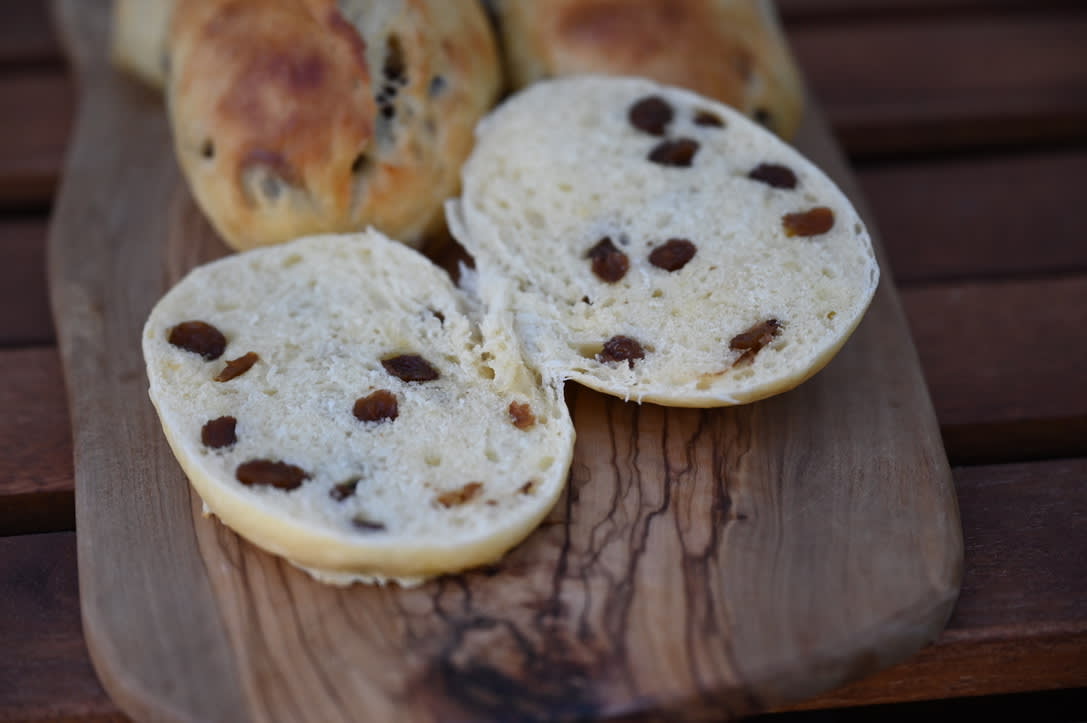
About German & Central European Specialty
The German-speaking countries hold the world's most documented bread tradition. The Deutsches Brotinstitut catalogs over 3,200 distinct registered varieties, a UNESCO-recognized cultural heritage. Where French baking centers on lean white-wheat doughs and Italian on enriched holiday breads, German bread culture is defined by mixed flours (wheat, rye, spelt, dinkel) and a strong preference for sourdough acidification. The historical reason is that rye dominates in the colder north and east. The cultural reason is that the slightly sour profile is the regional flavor signature. Roggenbrot, Pumpernickel, Bauernbrot, Vollkornbrot, and Brötchen sit here, alongside Swiss Ruchbrot, Austrian Vinschgerl, and the dense seed-and-grain Mehrkornbrot found in every Bäckerei.
Characteristics
Flour blends are the structural signature. A 60/40 wheat-to-rye Mischbrot. A 70/30 rye-dominant Roggenmischbrot. Or 100% rye Vollkornbrot. Hydration tracks the rye percentage: around 65% for wheat-leaning blends, 85%+ for high-rye. Most formulas use a two-stage sourdough (a Detmolder Dreistufenführung, the classic three-stage rye sour, or a simpler single-build) contributing 30 to 40% of total flour. Salt is typically 1.8 to 2.2%. Bakes run long and dark: 250°C start, dropping to 200°C, total bake 50 to 80 minutes depending on loaf size. A thick, well-bittered Kruste is the visual and flavor hallmark of the tradition, and it isn't optional.
Tips for getting it right
If you're coming from French or sourdough-only traditions, the hardest adjustment is accepting that German breads aren't open-crumb breads. The texture target is dense, moist, sliceable, and even-crumbed. These breads are engineered for the open-faced Belegtes Brot rather than the loose chew of an artisan boule. Don't over-develop gluten in mixed-flour doughs. Rye and high-extraction wheat resent kneading. For Brötchen and Kaisersemmeln, steam injection in the first 8 minutes is critical for the characteristic crisp shatter. A cast-iron pan with ice cubes on the oven floor approximates a deck oven. Wait at least 12 hours before slicing rye-dominant loaves.