Rolls & Small Breads
Portion-sized breads, shaped individually — lean or enriched
- Weight
- 40–180g per piece
- Bake
- 220–230°C
- Bake time
- 12–25 minutes
- Style
- Lean or enriched
Buns Recipes
4 recipes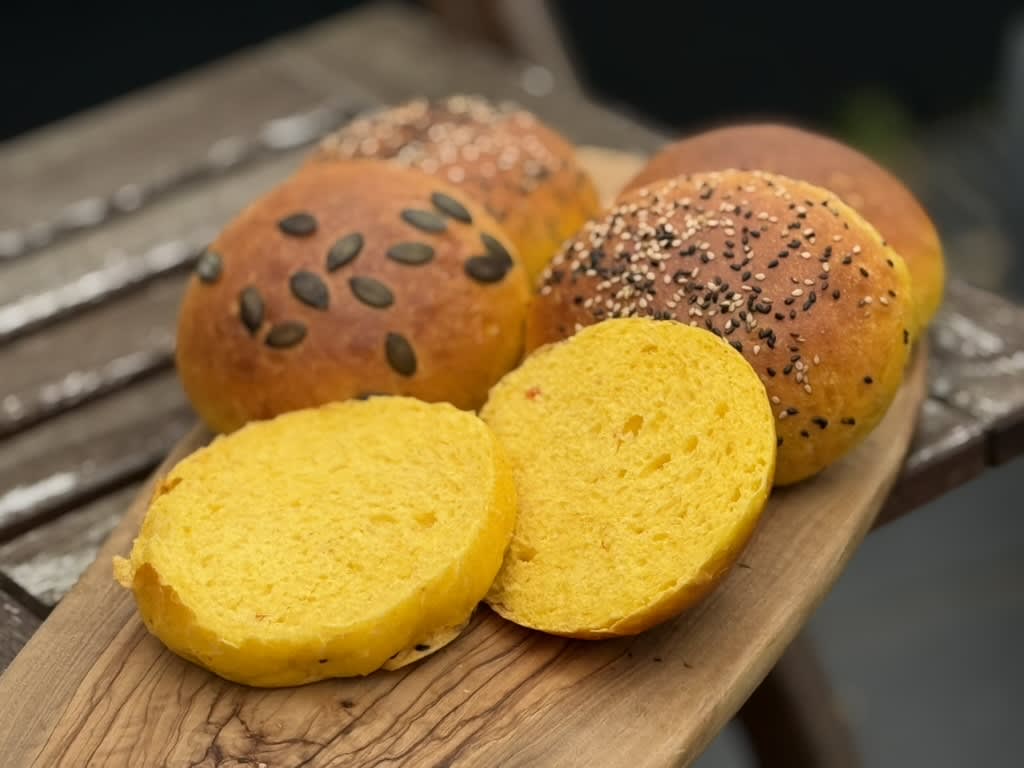
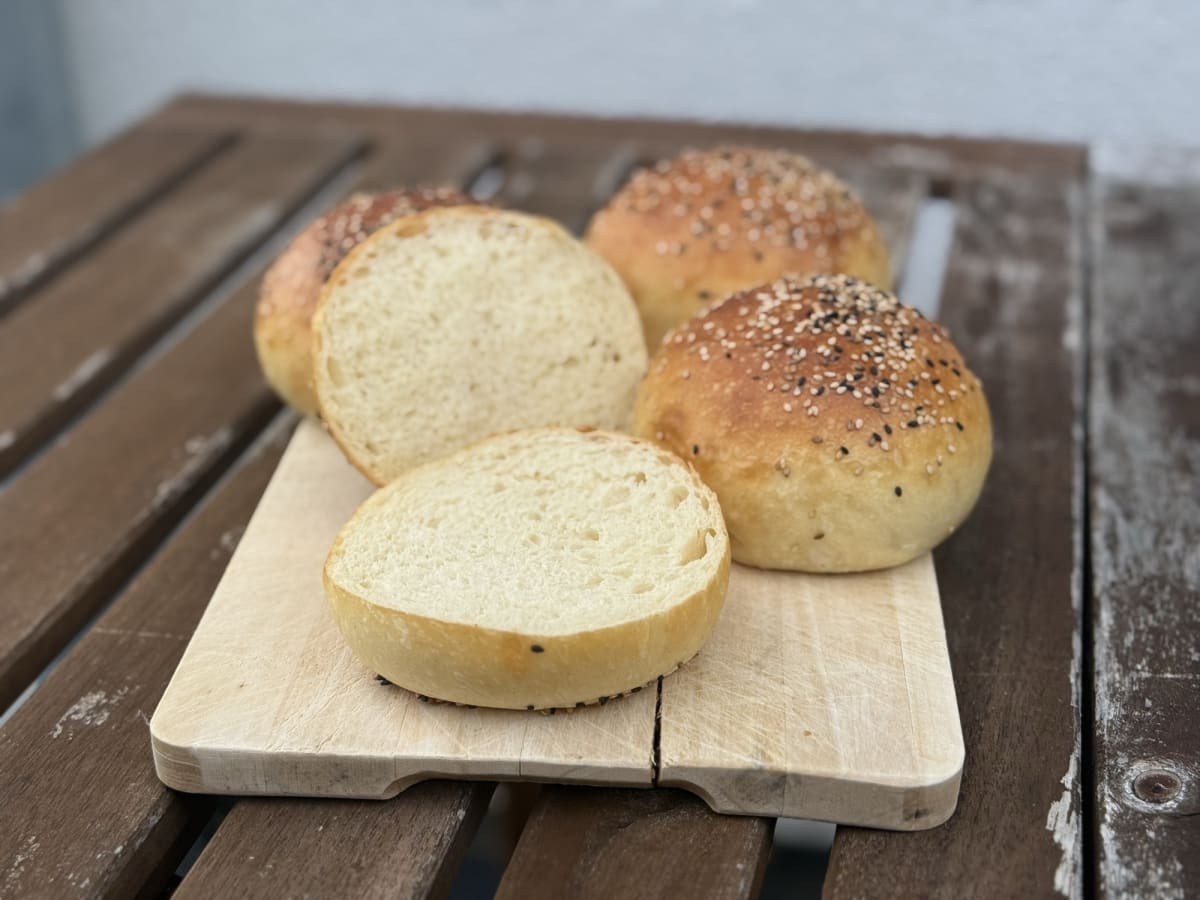

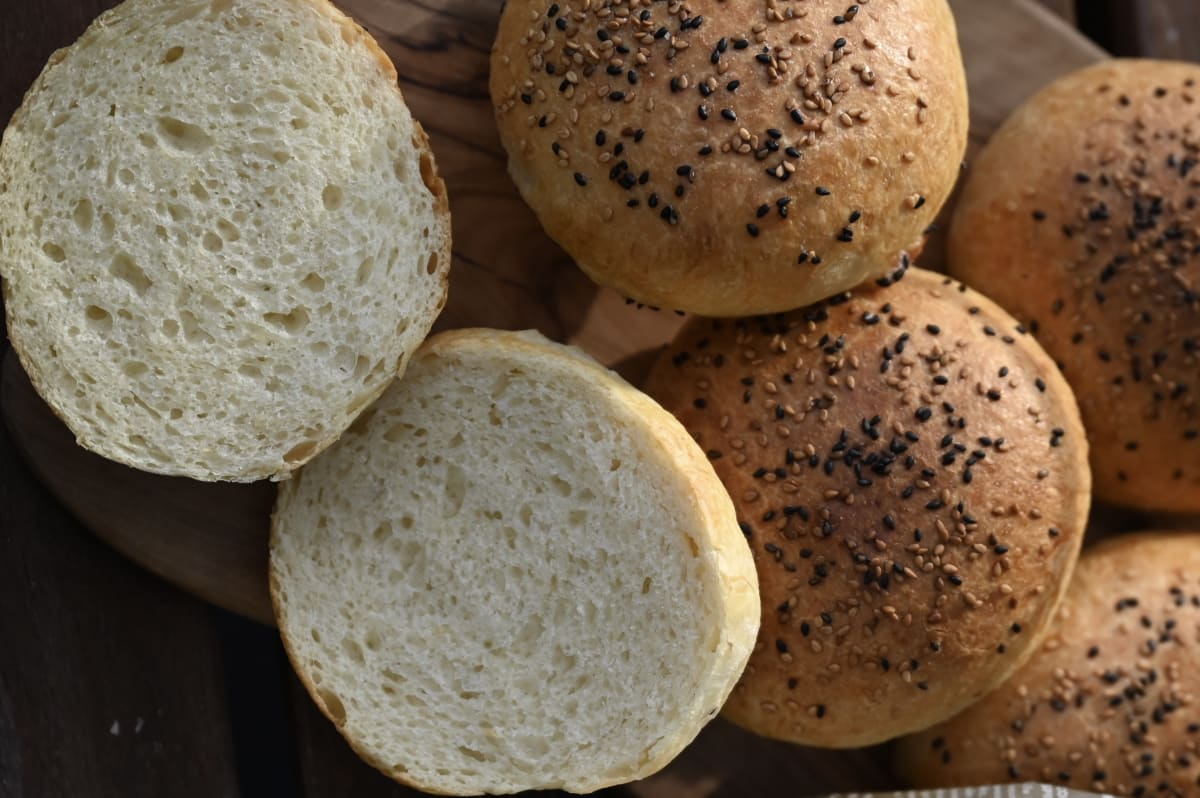
About Rolls & Small Breads
Rolls aren't defined by flavor or technique. They're defined by size. Any bread dough can become a roll: lean French Kaisersemmeln, enriched American Parker House, sourdough sandwich rolls, German Brötchen, Japanese milk-bread rolls, Portuguese papo-secos. What changes when you scale a 1 kg loaf down to a 60 g roll is everything that matters technically. Surface-to-volume ratio doubles. Bake time drops by 70%. Steam matters more. Shaping precision becomes visible. A subtle shaping flaw on a boule disappears under the crust; on a roll it produces a misshapen lump. The category exists because the technique adjustments are the same regardless of which base dough you start from.
Characteristics
Typical roll weights run 40 to 80 g for dinner rolls and Brötchen, 80 to 120 g for sandwich rolls and hamburger buns, 120 to 180 g for kaiser-style. Bake temperatures run hotter than for loaves, around 220 to 230°C versus 200 to 220°C, because the smaller mass needs faster crust set to prevent over-baking the interior. Bake times run 12 to 18 minutes for small rolls, 18 to 25 minutes for larger ones. Steam is critical in the first 5 to 8 minutes for crisp-crust styles. Soft styles get a brush of egg wash or milk wash instead. Most yeasted rolls use a sweet, slightly enriched dough: 3 to 6% sugar, 4 to 8% fat or butter, milk in place of some or all water. Pure lean rolls like Brötchen and Kaisersemmeln skip enrichment entirely.
Tips for getting it right
Uniform weight is the single biggest visible quality marker. A kitchen scale and 5 g tolerance produces a tray of rolls that look professional. Eyeballing produces a tray that looks like beginner work no matter how good the dough was. For crisp-crust rolls, score the surface (a single slash, an X, or the five-cuts of a Kaiser) right before loading. Pre-scored rolls go floppy. For soft enriched rolls, place them close enough to touch during the final proof so they bake into pull-apart "kitchen" loaves. The contact points stay soft and the exposed tops crisp. Don't skimp on bench-rest after pre-shaping. At this small scale a 10-minute rest makes the difference between tight, even shapes and lopsided ones.